
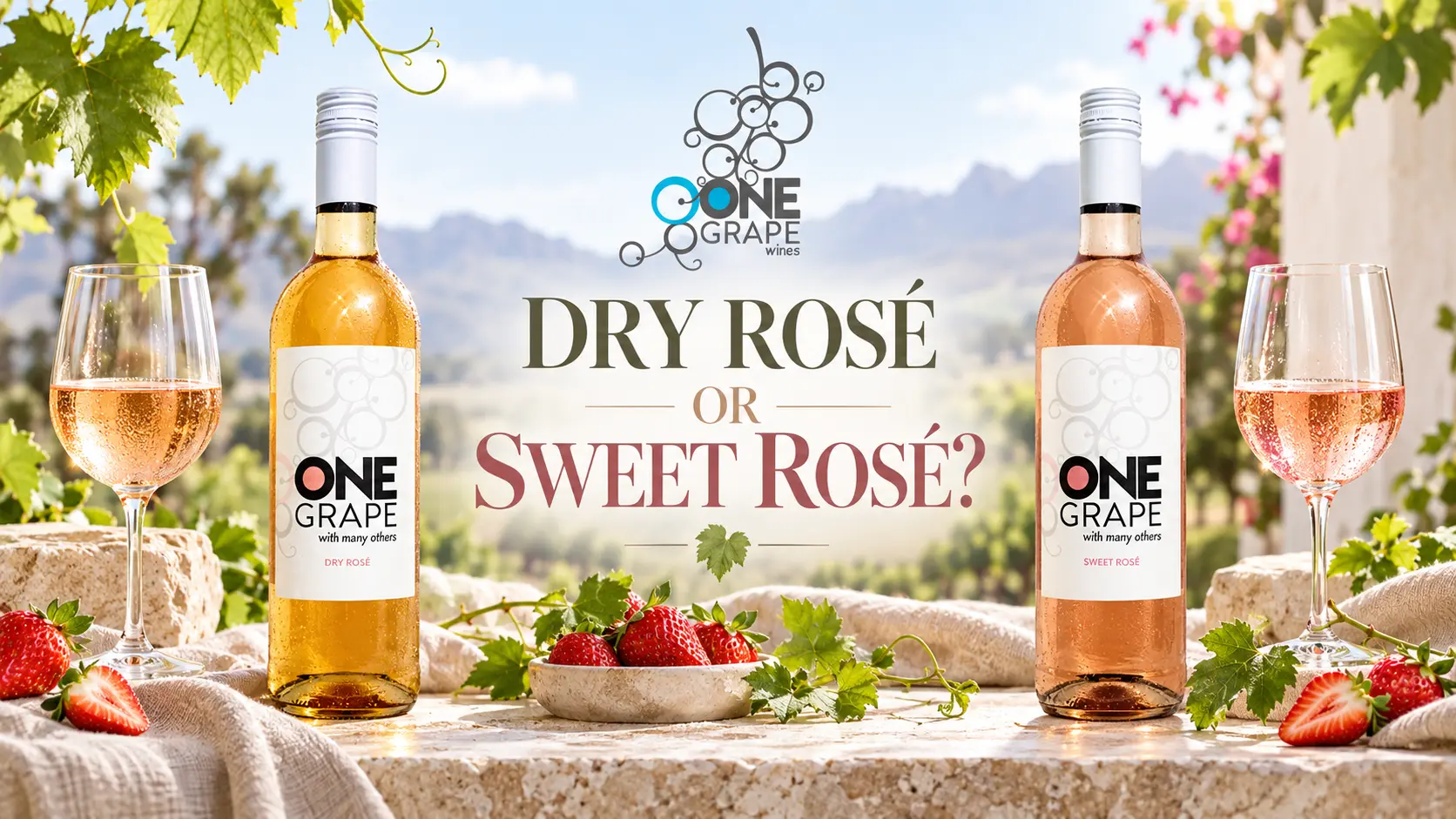
The difference between dry rosé and sweet rosé is mainly the amount of perceptible sweetness and the balance created by acidity, fruit and texture. Choose dry rosé when you want crisp refreshment and a food-friendly finish; choose sweet rosé when you prefer softer, more obviously sweet red-fruit flavours or need a wine that can meet spicy food and dessert-style cheese.
What “dry” and “sweet” mean in rosé
In wine language, dry means that little obvious sweetness remains in the finished wine. Sweet rosé contains more residual sugar, but sweetness is not the only thing you taste. Acidity, alcohol, fruit concentration and serving temperature all affect the impression in the glass.
A dry rosé can still smell strongly of ripe strawberries, while a sweet rosé may feel lively rather than syrupy when it has enough freshness. This is why colour alone cannot tell you how sweet a wine will taste. Read the product notes and, when available, the residual sugar figure.
Neither style is automatically better. The right choice depends on your palate, food and occasion.
OneGrape Dry Rosé: fresh and structured
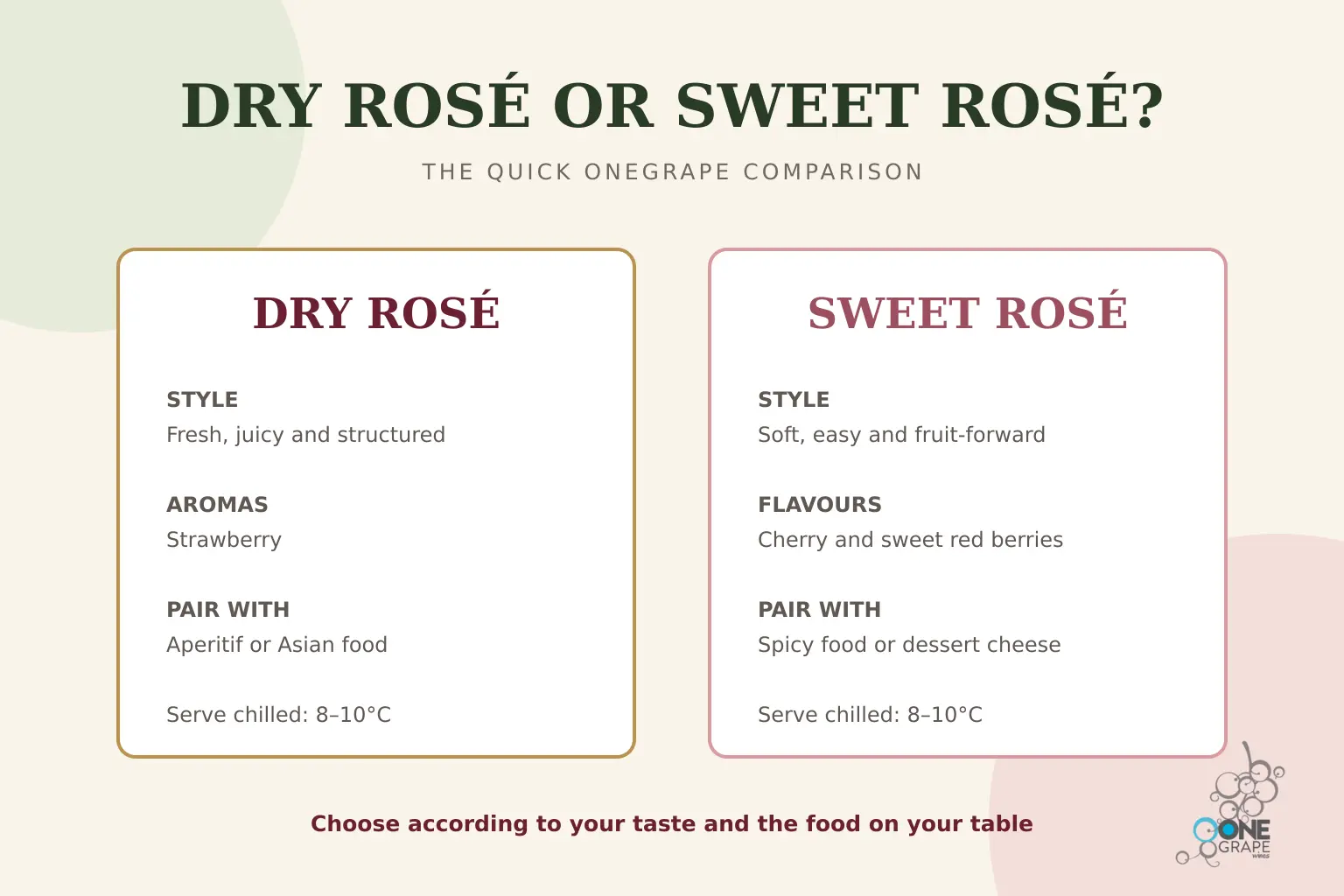
OneGrape Dry Rosé comes from Western Cape coastal areas including Swartland and Wellington. The listed blend is predominantly Sauvignon Blanc with Chenin Blanc and a small Pinotage component for colour. Official notes describe strawberry aromas and juicy fruit balanced by acidity on the finish.
Its listed residual sugar is 2.5 g/L, supporting a dry style. Serve it chilled at approximately 8–10°C. It works well as an aperitif and with Asian food, and it can also suit grilled vegetables, chicken, charcuterie and fresh salads.
OneGrape Sweet Rosé: soft and fruit-forward
OneGrape Sweet Rosé is associated with Rawsonville and is predominantly Chenin Blanc with a small Pinotage component for colour. The official description highlights floral aromas, cherry and sweet red-berry flavours, with a soft and easy palate.
Its listed residual sugar is 25 g/L, making the sweetness more noticeable than in the Dry Rosé. Serve it chilled at approximately 8–10°C. OneGrape suggests it with an aperitif, spicy Asian food or a dessert cheese platter.
Choose according to the food
Dry rosé is versatile when a table contains salty, savoury and fresh flavours. It can refresh the palate beside charcuterie, grilled chicken, prawns, tomato dishes or salads. Its lower sweetness makes it a natural all-rounder for lunch and outdoor meals.
Sweet rosé can be helpful when the food contains chilli, sweet spice or a dessert element. Sweetness can soften the impression of heat, while red-fruit flavours sit comfortably with fruit and cheese. Avoid pairing a delicate sweet rosé with very heavy, bitter or intensely smoky food that overwhelms it.
When serving a crowd, offering both is perfectly reasonable. Label them clearly and let guests choose rather than assuming one preference.
Choose according to the occasion
For a spring lunch, picnic or welcome drink, dry rosé brings a crisp and polished mood. For relaxed celebrations, spicy food or guests who openly prefer sweeter wine, sweet rosé may feel more generous and approachable.
If you are buying a gift and do not know the recipient’s preference, ask discreetly or include one of each. A comparison pair turns uncertainty into an experience and gives the recipient a reason to explore both styles.
Serve rosé well
Chill the bottle before serving, but avoid freezing it or adding so much ice that the flavour becomes diluted. Use clean glasses, return the open bottle to a cooler or refrigerator between pours and keep it out of direct sunlight at an outdoor table.
Very cold wine can hide aromas. If the glass tastes muted, wait a few minutes and taste again. As the wine warms slightly, fruit and floral notes often become easier to notice.
Compare the current OneGrape Dry Rosé and OneGrape Sweet Rosé product pages before ordering.
Talk to OneGrape
Browse the OneGrape online shop for current availability. For delivery areas, stockist information or help choosing wine, call 076 811 2263 or email online@onegrape.co.za.
Frequently asked questions
Is all pink wine sweet?
No. Rosé can be bone-dry, gently off-dry or clearly sweet. Colour does not reliably indicate sweetness.
Which OneGrape rosé is sweeter?
The Sweet Rosé has a listed residual sugar of 25 g/L, compared with 2.5 g/L for the Dry Rosé.
Which rosé is better with spicy food?
Both product pages mention Asian food, but the sweeter style can be especially helpful with chilli because sweetness may soften the impression of heat.
What temperature should rosé be served at?
Both OneGrape rosés list approximately 8–10°C. Serve chilled and protect the bottle from direct sunlight.
Enjoy wine responsibly. Do not drink and drive. Alcohol is not for sale to persons under 18.