

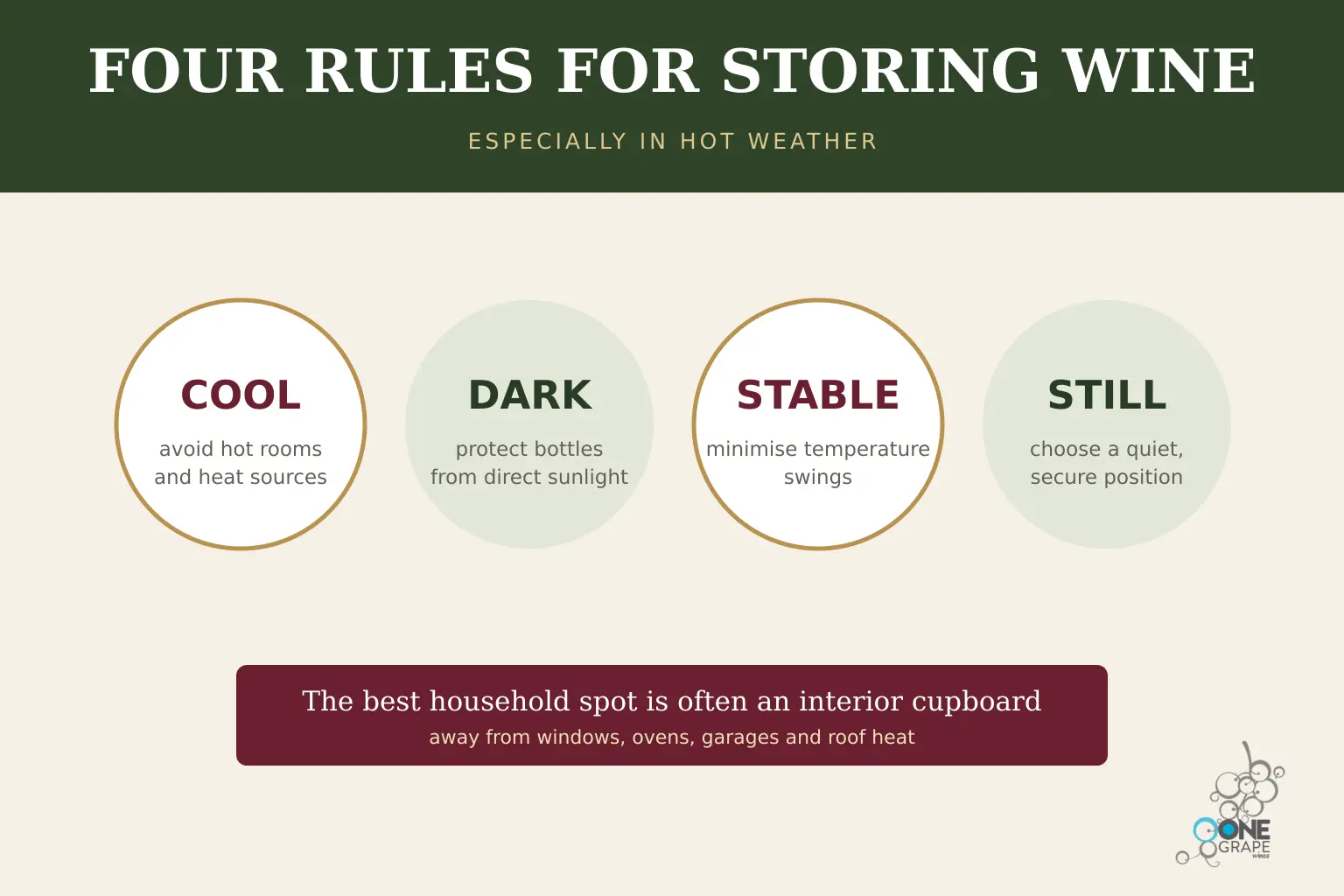
The best place to store wine in a South African home is usually the coolest, darkest and most temperature-stable interior cupboard available. Keep bottles away from direct sunlight, ovens, hot garages, roof spaces and windows. You do not need a cellar for short-term storage, but you do need to protect wine from heat and repeated temperature swings.
Why heat is a problem for wine
Wine changes over time, and high temperatures can accelerate that change. Prolonged heat may reduce fresh fruit character and leave wine tasting dull. A compromised seal can also allow oxidation. The issue is not one warm afternoon at the table; it is extended exposure or repeated heating and cooling.
The Wine & Spirit Education Trust recommends cool, constant conditions and protection from bright light for longer-term storage. Most households cannot maintain cellar conditions, so the practical objective is to find the most stable available spot and avoid obvious heat sources.
Do not leave wine in a parked car, on a sunny windowsill or beside an oven while waiting for an event. Move deliveries indoors soon after they arrive.
Choose the best storage place in your home
An interior cupboard on the lower level of the house is often better than a display rack in a bright living room. Lower positions tend to experience less rising heat, while internal walls are less affected by direct sun.
Consider the daily pattern of the room. A cupboard may feel cool in the morning but warm dramatically in the afternoon. Kitchens, garages, laundry areas and rooms directly below a hot roof can change more than expected.
If you have air conditioning, a cabinet in a consistently used room may work for short-term storage. Avoid placing bottles directly in the path of hot air, vibration or strong odours.
Keep light and temperature steady
Direct sunlight combines heat with strong light, making a windowside rack a poor choice. Even tinted glass does not make prolonged bright exposure desirable. Keep wine inside a closed cupboard or shaded cabinet.
Consistency matters. Moving bottles repeatedly between very cold and very warm conditions is not a helpful substitute for stable storage. If wine is intended for drinking within weeks or a few months, choose a steady household environment and leave it there until it needs chilling for service.
For a detailed reference, see WSET’s guide to serving temperatures and wine storage.
Should bottles be stored upright or on their side?
For short-term storage, secure placement and protection from heat are the priorities. Bottles with screw caps can stand upright. Traditionally, cork-sealed bottles intended for longer ageing are stored on their side so the closure does not dry out.
Whichever position you use, prevent rolling, knocks and vibration. A stable shelf is better than the top of a refrigerator, where heat and movement may be present. Check that shelving can safely carry the weight of a full case.
Chill wine for serving, not permanent rescue
White and rosé wines are generally served chilled, but a domestic refrigerator is not always ideal for months of storage because it can be very cold and dry. Use it to bring wine to serving temperature and to protect an opened bottle for a short period.
Move Sauvignon Blanc or Rosé into the fridge before the occasion. If it becomes too cold, allow a few minutes in the glass. For red wine in summer, a brief chill can be useful when the room itself is very warm.
What to do after opening
Replace the closure promptly and refrigerate the bottle. Cooler conditions slow the changes that happen after oxygen enters. Bring red wine out a little before serving again so it is not uncomfortably cold.
Opened wine does not have one guaranteed lifespan. Style, closure, remaining volume and storage all matter. Check aroma and flavour before serving, and use leftover wine in cooking when it is still sound but no longer at its best in the glass.
Talk to OneGrape
Browse the OneGrape online shop for current availability. For delivery areas, stockist information or help choosing wine, call 076 811 2263 or email online@onegrape.co.za.
Frequently asked questions
Can I store wine in a kitchen cupboard?
Only if it stays away from the oven, stove, sunlight and hot appliances. An interior cupboard in a cooler room is usually better.
Is a garage suitable for wine?
Many South African garages become very hot and experience large temperature changes, so they are generally a poor choice.
Can red wine go in the fridge?
Yes, briefly. Refrigerate an opened bottle and allow it to warm slightly before serving. A short chill can also help an overheated red.
What should I do with a wine delivery on a hot day?
Bring it indoors promptly and move it to a cool, dark, stable position. Do not leave the case in a parked vehicle or direct sun.
Enjoy wine responsibly. Do not drink and drive. Alcohol is not for sale to persons under 18.