
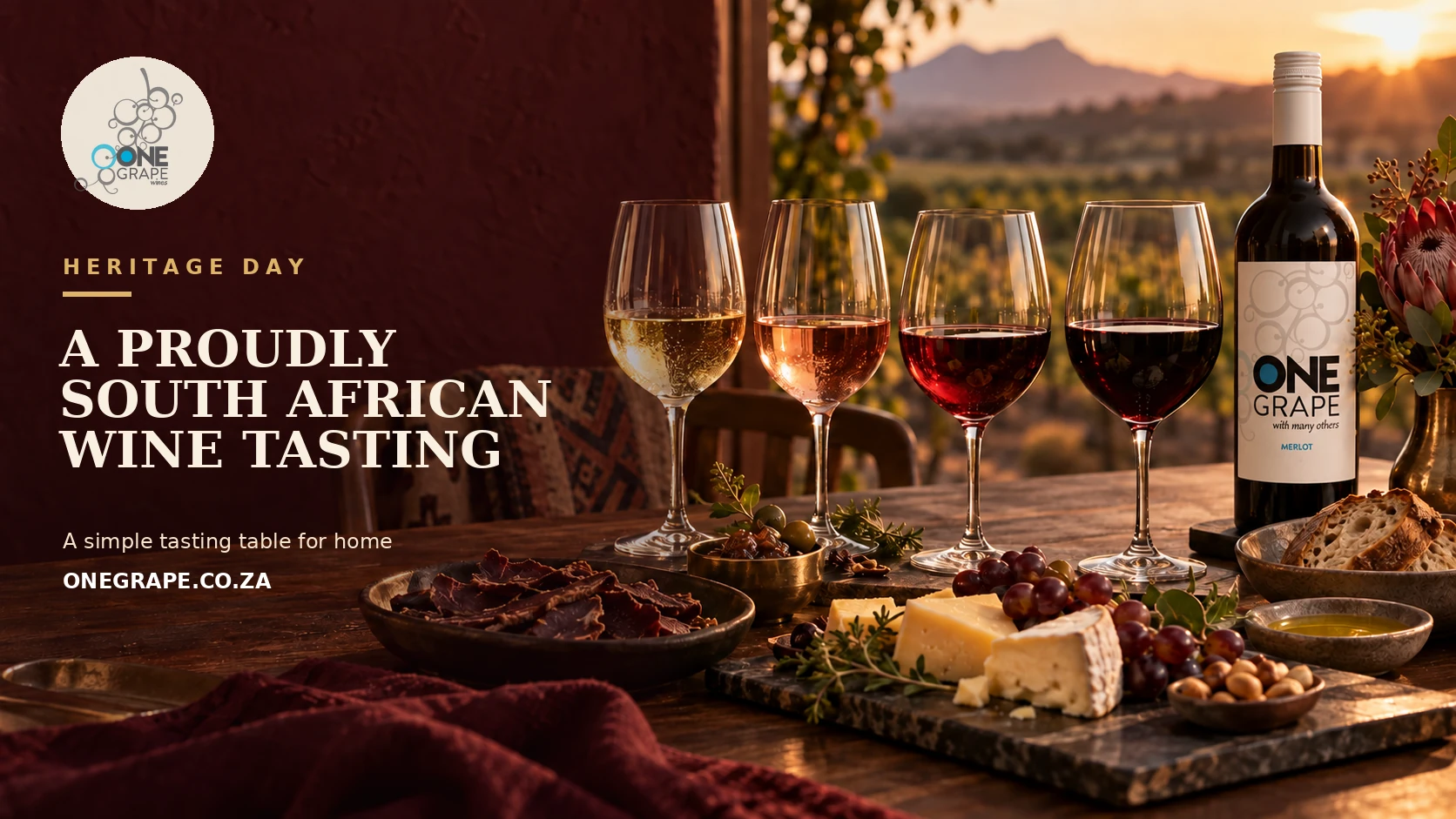
Heritage Day is a chance to celebrate the people, flavours and stories that make South Africa feel like home. A relaxed wine tasting is a beautiful way to bring those elements together—and it does not require a sommelier, a cellar or a formal dining room.
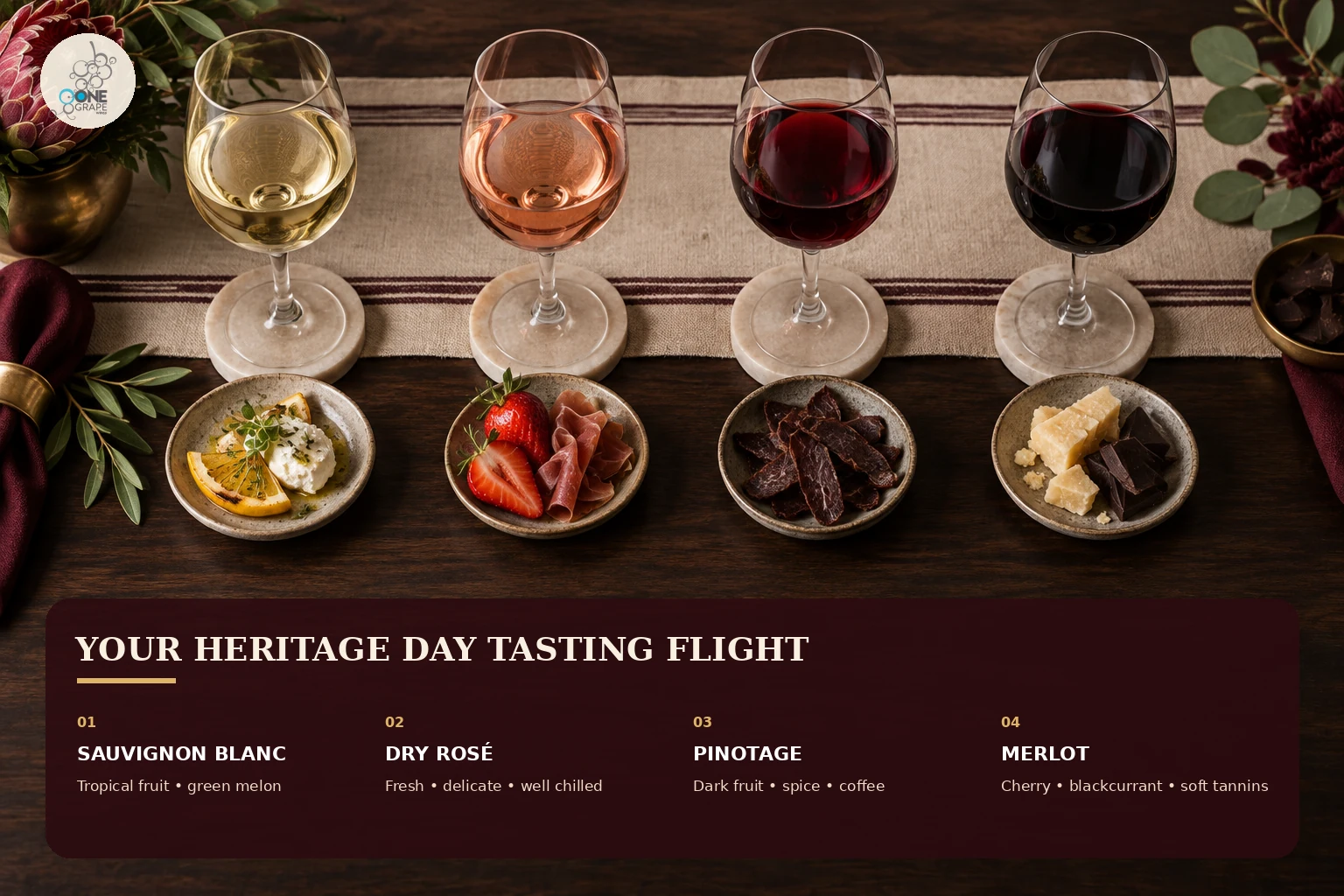
The simplest plan is to serve four wines from lightest to fullest: a crisp Sauvignon Blanc, a chilled Dry Rosé, a characterful Pinotage and a smooth Merlot. Use small pours, place water and simple snacks on the table, and give guests a few useful tasting prompts. That is enough to turn an ordinary gathering into a memorable South African wine experience.
Why a tasting table works so well for Heritage Day
Wine tasting can sound formal, but at home it should feel like a conversation. Each bottle gives guests something to notice and compare: the colour in the glass, the first aroma, the balance between fruit and freshness, and the way a small bite changes the taste.
It also creates a natural journey through South African wine. OneGrape sources wines from established Western Cape areas including Robertson, Rawsonville, Breedekloof, Swartland and Wellington. Moving through several wine styles lets the table explore more than one region and more than one expression of the grape.
The aim is not to identify every aroma correctly. There is no prize for using the most technical words. The aim is to slow down, taste attentively and share what each person enjoys.
Choose a four-wine flight from light to full
Serving wine in the right order helps delicate flavours remain clear. If you begin with the boldest red, a crisp white may taste quiet afterwards. Start with the lightest, freshest wine and finish with the deepest red.
1. Begin with OneGrape Sauvignon Blanc
OneGrape Sauvignon Blanc is a refreshing opening wine. The official tasting notes describe tropical fruit and green melon on the nose, followed by a crisp, fruity palate and a long finish. Serve it chilled at approximately 8–10°C.
Ask guests to notice the wine’s pale colour, fresh aroma and clean finish. Then taste it with a bite of citrus-dressed salad, grilled prawn, goat’s cheese or lightly seasoned chicken.
2. Follow with OneGrape Dry Rosé
A chilled OneGrape Dry Rosé creates a gentle bridge between the white and red wines. Rosé belongs naturally at a South African spring table: it is refreshing outdoors, visually inviting and easy to serve with a varied spread.
Encourage guests to compare its colour and body with the Sauvignon Blanc. Does it feel rounder? Which fruit aromas stand out? Does a salty bite make the fruit seem brighter? Try it with charcuterie, strawberries, grilled chicken, mild cheese or a tomato-and-herb tart.
3. Bring in African Horizon Pinotage
Pinotage gives the tasting a distinctly South African centre. The African Horizon Pinotage offers dark-fruit, spice, dark-chocolate and coffee-like notes, supported by smooth tannins and a lingering finish.
This is the moment to bring biltong, boerewors bites, smoky mushrooms or a small piece of dark chocolate to the table. Ask guests to smell the wine before and after tasting the food. They may notice that the savoury or smoky flavours bring different parts of the wine forward.
4. Finish with OneGrape Merlot
OneGrape Merlot makes a welcoming final glass. Its official notes highlight cherry and blackcurrant aromas, a medium-bodied palate and an easy tannin structure. The recommended serving temperature is approximately 12–14°C, which means the wine can be served slightly cool rather than warm from a sunny room.
Pair it with mature cheese, tomato-based dishes, pork, mushrooms or a small savoury pastry. Merlot is especially useful when some guests are still discovering red wine because its fruit and softer structure are easy to approach.
Set the table without specialist equipment
You do not need four glasses per person. If you have enough, a row of glasses creates a beautiful tasting display and makes comparison easy. If not, use one clean glass per guest and rinse it with a small amount of the next wine or water between pours.
- A clean wine glass for every guest
- A jug or bottle of water and a water glass
- Plain crackers or bread to refresh the palate
- A small container for unwanted wine
- A pen and simple tasting card for anyone who wants to take notes
- An ice bucket or cooler for the Sauvignon Blanc and Rosé
- A shaded place for the red wines if you are sitting outdoors
Keep fragrances, scented candles and strongly perfumed flowers away from the tasting area. They can make it harder to notice the wine’s own aromas.
Use small pours and an unhurried pace
A tasting is not the same as pouring a full glass of every wine. A small pour is enough to see, swirl, smell and taste. Guests can return to a favourite wine with the meal after the tasting flight is complete.
Allow about ten minutes per wine. Introduce the style, share two or three notes, let everyone taste, and then invite conversation. Avoid turning the experience into a lecture. A simple question such as “What changed when you tried it with the food?” usually creates a more enjoyable discussion than asking people to name an exact aroma.
Place water on the table from the beginning, include alcohol-free options and encourage responsible enjoyment—especially for anyone who will be driving.
Add South African bites that support the wine
The food does not need to become a full catering project. Choose one or two bites per wine and keep portions small during the tasting.
- Sauvignon Blanc: grilled prawns, goat’s cheese, cucumber, citrus salad or herbed chicken
- Dry Rosé: charcuterie, strawberries, mild cheese, tomato tart or grilled vegetables
- Pinotage: biltong, boerewors bites, smoky mushrooms, mature cheese or dark chocolate
- Merlot: mini meatballs, mushroom tartlets, pork bites, tomato pastries or cheddar
Bread, crackers, olives and grapes can fill the spaces between the main bites and make the table feel abundant without overwhelming the wines.
Give guests useful tasting prompts
People often say they do not know enough about wine to join a tasting. A few friendly prompts remove that pressure.
Smell: Does the wine suggest fruit, flowers, herbs, spice or chocolate?
Taste: Is it fresh, soft, bold, sweet, dry or smooth?
Finish: Does the flavour disappear quickly or remain for a while?
Choose: Would you enjoy it on its own, with food, or both?
There are no wrong personal preferences. Two people can taste the same wine and notice different things because memory and experience influence how we describe aromas and flavours.
Turn the tasting into a relaxed Heritage Day meal
Once all four wines have been tasted, invite guests to return to their favourite and enjoy it with the main meal. A braai works beautifully, but it is not the only choice. Roast chicken, bobotie, tomato bredie, vegetable dishes, savoury tarts and sharing boards can all sit comfortably at the table.
Keep the mood generous rather than competitive. Ask each guest to choose a favourite wine, the most surprising pairing, or the bottle they would bring to a future celebration. Those answers give the gathering a natural ending and may help you plan the next case.
Make OneGrape part of your Heritage Day table
OneGrape was founded in 2017 with a focus on quality, value and easy-drinking wines for everyday South African occasions. Browse the online shop to check current availability. For delivery areas, stockist information or help choosing wines, call 076 811 2263 or email online@onegrape.co.za.
Frequently asked questions
How many wines should I include in a home tasting?
Four wines give guests enough variety without making the experience tiring. A white, rosé and two contrasting reds create a balanced progression.
Do I need a separate glass for every wine?
No. One clean glass per guest is enough. Rinse between wines, or use a tiny splash of the next wine to prepare the glass.
Should red wine be served at room temperature?
In a warm South African room, red wine can become too warm. The OneGrape Merlot page recommends approximately 12–14°C, so serving it slightly cool is appropriate.
Can I host the tasting outdoors?
Yes. Keep white and rosé chilled, protect all bottles from direct sunlight, provide plenty of water and choose a table where glasses will stand securely.